Showing posts with label Founders. Show all posts

Monday, March 23, 2026

The Graveyard of Dr. William Beanes

Saturday was the first warm and sunny day in months, and so I decided to take a spin down to Southern-ish Maryland and visit the graves of Dr. William Beanes, and his wife. 

As I followed the GPS directions and entered the town of Upper Marlboro, I had to hunt a bit for the grave-site. It was up a hill with no path or steps, adjacent to the abandoned Upper Marlboro High School. 

I made my way around to the back of the school where there was a path to the grave-site. It is now a small lot, on the site of the home he had shared with his wife. The house was known as Academy Hill, said to be one of the finest houses in the town. It overlooked the aptly named Schoolhouse Pond. Dr. and Mrs. Beanes lived in the house from 1779 to 1828.

Although the original house burned in 1855, it was re-built and opened as Upper Marlboro Academy. In 1836 the president of the Upper Marlboro Academy's Board of Trustees was authorized to purchase the Beanes’ property from a Mr. Roderick McGregor, for $1,360. 

A Mr. Henry M. McGregor contracted to alter and add to the old William Beanes dwelling for use as an Academy. The building was completed and ready for pupils on January 1, 1837. The school building used prior to that date was sold to the Vestry of the Trinity Church. 

A representative of the Academy Board of Trustees reported to the State General Assembly annually,3 and the State provided an annual fund to the Academy, enabling it to provide free education to some indigent students. 

Tuition for most students was $20 per year in 1835, and $10 more for a mathematical education. The Academy admitted both boys and girls and in 1844 had 60 pupils, including some from Washington, D.C. and Baltimore.

There are four brick pillars around the graveyard, topped ironically with cannon balls, with two additional pillars at the entrance, all of which are connected with an ironwork fence. 

The pillars have plaques on them, one dedicated by the Daughters of the War of 1812,

and the other by the Medical & Chirurgical Faculty of Maryland in 1914. 

Additionally, there is the William Beanes Elementary School and the adjacent William Beanes Community Center. 

Thursday, March 19, 2026

Dr. William Beanes, The Movie... Sort Of

I am working on a lecture about Dr. William Beanes, the man behind the story of our national anthem, The Star-Spangled Banner. I've written a lot about him before, but in this most recent search, I found something new!

Apparently, in 1936, a short film, "The Song of a Nation," was made about the writing of the National Anthem. 

The Song of a Nation (1936) is a Warner Bros. Technicolor short film dramatizing Francis Scott Key writing "The Star-Spangled Banner" in 1814. The film depicts the American lawyer witnessing the British bombardment of Fort McHenry, leading to the creation of the national anthem, played with a mix of historical drama and, at times, dramatic recitation rather than singing of the lyrics.

Key Details of "The Song of a Nation" (1936)

  • Plot: The short film dramatizes the events of September 1814, showing Francis Scott Key (played by Donald Wood) being detained on a British ship and feeling inspired to write the lyrics after witnessing the U.S. flag still flying over Fort McHenry after a massive bombardment.
  • Production: It is a 1930s Technicolor short produced by Warner Brothers, designed to showcase the beauty of 1930s color film.
  • Legacy: While the film is a dramatized account, it highlights the real-life inspiration of the song, which was officially adopted as the U.S. national anthem in 1931.

Real-Life Story vs. The Film

  • The Poem: Francis Scott Key actually wrote the poem, initially titled "The Defence [sic] of Fort M'Henry," after seeing the American flag survive the night of September 13–14, 1814.
  • The Tune: The lyrics were set to the tune of "To Anacreon in Heaven," a popular 18th-century British song by John Stafford Smith.
  • Official Status: While the song gained immediate popularity, it was not officially recognized as the national anthem until 117 years later, when President Herbert Hoover signed the act in 1931.
Here is the movie.

Monday, March 16, 2026

Justice Stephenson Archer

I have written and lectured about Dr. John Archer a number of times. In 1767, he was the first person to receive a medical degree in America, which had not yet become the United States. He taught medicine at his home, Medical Hall in Bel Air, Harford County. He was father to six sons, five of whom became physicians like their father. 

However, one became at attorney/politician. From Wikipedia:

Stevenson Archer (October 11, 1786 – June 26, 1848) was a judge and United States Representative from Maryland, representing the sixth district from 1811 to 1817 and from 1819 to 1821. His son Stevenson Archer and father John Archer were also U.S. Congressmen from Maryland. 

Archer was born at Medical Hall, near Churchville, Harford County, Maryland, on October 11, 1786, to Catherine and John Archer. He attended Nottingham Academy of Maryland, later graduating from Princeton College in 1805. He studied law, was admitted to the bar of Harford County, Maryland, in 1808, and commenced practice the same year. 

From 1809 to 1810, Archer served as a member of the Maryland House of Delegates and was later elected as a Democrat-Republican to the Twelfth United States Congress to fill the vacancy caused by the resignation of John Montgomery. He was reelected to the Thirteenth and Fourteenth Congresses and served from October 26, 1811, until March 3, 1817. 

Having reached the Constitutional age of service in the House (25 years of age) less than one month prior to taking his seat, Archer was the youngest member of the Twelfth Congress, which was defined at least in part by the injection of youth into the government. Archer was one of the firmest supporters of the War Hawk agenda in Congress, consistently voting for military preparation and the War of 1812.

In Congress, Archer served as chairman of the Committee on Claims (Thirteenth Congress), and as a member of the Committee on Expenditures in the Department of the Navy (Fourteenth Congress). During the War of 1812, he was paymaster to the Fortieth Maryland Militia, and was appointed on March 5, 1817, by President James Madison as United States judge for the Territory of Mississippi, with powers of Governor, holding court at St. Stephens.

Archer resigned within a year and returned to Maryland to continue his law practice. He was elected to the Sixteenth Congress, serving from March 4, 1819, until March 3, 1821, and, in Congress, served as chairman of the Committee on Expenditures in the Department of the Navy. In 1823, Archer was appointed chief judge of the judicial circuit court of Baltimore and Harford Counties and Baltimore City. In 1844, Archer was appointed by Governor Thomas Pratt as chief justice of the Maryland Court of Appeals and served until his death in June of 1848.

All of this is in light of an auction purchase over the weekend. I was at a country auction in rural Pennsylvania and spotted an old silhouette in a frame. As I moved in to look at it, I was shocked to see it was Stevenson Archer, who was the Chief Justice of the Maryland Court of Appeals.

He was a judge in both Baltimore City, where a portrait of him hangs in the Baltimore City Law Library, and in Harford County. 

The picture is simply framed in what looks like a very early frame with wavy glass.

There were two notes attached to the glass, one saying who Justice Archer was and the other indicating some relationship with the Liriodendron Foundation. Liriodendron was Dr. Howard Kelly's summer home outside of Bel Air, Harford County. 

Like Marcia, I love finding things for the office at old country auctions!

Friday, February 13, 2026

President's Day

As we all know, George Washington was the first President of our country. He served from April 30, 1789 to March 4, 1797. President Washington died on December 14, 1799, not quite a year after the founding of the Medical & Chirurgical Faculty of Maryland was established by the legislature in Annapolis. 

When Washington died, there were several physicians attended him, two of whom were Gustavus Brown!

Did you know that we have two Dr. Gustavus Richard Browns who were among our 101 Founders? One lived in Charles County, and the other in St. Mary’s County. They are clearly related, but the question is how.

For clarity, we are going to refer to them as GRB2 and GRB3, and the original Dr. Gustavus Richard Brown as GRB1.

Here’s what the Medical Annals of Maryland, and its editor, Eugene F. Cordell has to say:

Dr. GRB1 was born in Scotland in 1689 and immigrated to Maryland in 1708. In 1734, he purchased “Rich Hill” near Port Tobacco in Charles County. He had 12 children by his first wife, including three boys named Gustavus Richard Brown, all of whom died in their first year of life. When his first wife died, Dr. Brown remarried, and had two more children, one of whom was Dr. Gustavus Richard Brown (GRB2). He also operated a de facto medical school at Rich Hill and two of his students eventually became his sons-in-law. He died in 1755.

Dr. GRB2 was born in Charles County in 1747, and studied medicine at Edinburgh in 1768. While returning to Maryland, GRB1 spent time in the Medeira Islands where he collected numerous botanical specemins for his gardens at his home, Rose Hill. He was married and had four children, two of whom were named Gustavus and Gustavus Richard (!). In 1776, along with one of his nephews, he established an innocumation hospital, which he advertised in the portions of Maryland and Virginia along the Potomac River.

When President George Washington was on his deathbed, Dr. GRB2 was called to his side. He arrived from Maryland a scant seven hours before Washington’s death on December 14, 1799, and too late be be of any use. 

Washington at his Last Illness, with Drs. Craik and Brown. National Portrait Gallery, Smithsonian

In a letter after Washington’s death, “he acknowledges that they were wrong in bleeding Washington so much.” GRB2 died at age 56 at his house, Rose Hill in 1804.

After much reading and digging over several years, I finally discovered that Dr. GRB3 was the son of GRB2’s brother, the Rev. Richard Brown, and was older than his uncle, GRB2. GRB3 was born in Scotland in 1744, and eventually came to St. Mary’s County, MD after studying medicine at the University of Edinburgh in 1770. Dr. GRB3 received a summons on the night of December 13, 1799 to attend to President Washington, but by the time he arrived on the Maryland shore of the Potomac River, he received word that the President had already died.

Dr. GRB3 practiced medicine in St. Mary’s County for many years and eventually married the widow of one his patients, a Dr. Ireland, who was very wealthy and owned a property called “Summerseat.” He died there on July 3, 1801.

 Sources:    Medical Annals of Maryland, 1904. Edited by Eugene Fauntleroy Cordell, M.D. 

The Doctors Gustavus Brown of Lower Maryland. 1902. By Eugene Fauntleroy Cordell, M.D.

Tuesday, January 20, 2026

We are 227 Years Old Today!

On this exact day, in 1799, the Maryland State Legislature passed an order to establish the Medical & Chirurgical Faculty of the State of Maryland.

Happy 227th birthday to us!

Thursday, September 12, 2024

MedChi and the National Anthem

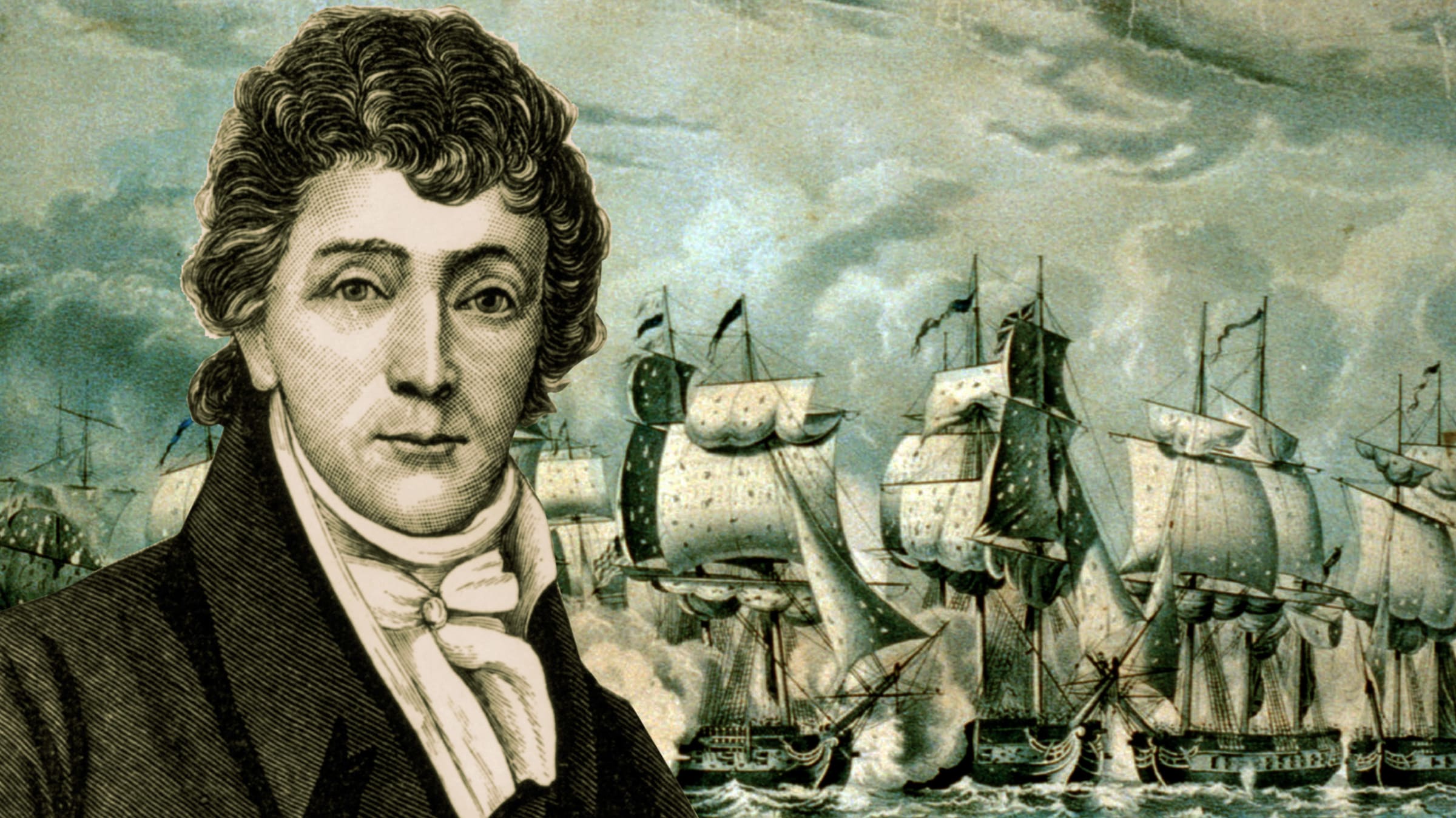
Today marks the 210th anniversary of the Battle of Baltimore and the subsequent writing of the American National Anthem. One of the founders of the Medical & Chirurgical Faculty, now known as MedChi, played a pivotal role in its writing.

Dr. William Beanes, one of the 101 Founders, was a physician/farmer in Upper Marlboro, Maryland. As the British moved up the shores and waters of the Potomac River, the soldiers camped at Beanes' farm. On their way back from burning the capital, they again camped at his farm. They were jubilant after their victory, and stole a pig to celebrate.
Dr. Beanes thought that was a violation of his agreement with the British, and arrested one of them. He was then arrested by the commander of the British Army and taken by boat down the Potomac and up the Chesapeake towards Baltimore. The British planned to burn and bomb Baltimore into oblivion like they did in Washington.

A young lawyer, Francis Scott Key, nephew of MedChi's first president, was given the job of negotiating with the British for Dr. Beanes' release. As the boat Key and Beanes were on moored off of Fort McHenry, they watched the Fort being bombed for 25 straight hours. 
When the sun rose on the morning of September 14, Key and Beanes could see that "the flag was still there" and Key began to write the poem that eventually became our National Anthem. 

In summary, if Dr. Beanes had not been arrested, and if Beanes' friend, Upton Scott, MedChi's first President, hadn't had a nephew who was a lawyer, then neither of these two men would have been in the Baltimore harbor, and the anthem would not have been written. 

To watch a short video about MedChi's role in writing the National Anthem, please click here to go to the MedChi Museum and Archives' YouTube channel. While you're there, we have several other videos about our history and some of our early accomplishments.

If you would like to make a contribution to support MedChi's Museum and Archives, please click here

Friday, September 6, 2024

World Premiere! The Museum and Archives YouTube Channel!

For the past several months, I have been working on a series of twelve videos, and I have just created a YouTube channel, MedChi Museum and Archives, which will eventually feature all twelve of these video. Right now, there are only eight on-line, but expect the additional four or five shortly.

Here are the videos and links to them:

1. Our Founding Link

2. The First Meeting Link

3. The War of 1812 Link

4. The Napoleon Chest Link

5. The First Dental School Link

6. Sir William Osler, MD Link

7. Max Brödel, Medical Illustrator Link

8. What's in a Name? Link

Each video is about five minutes long, so I hope you will either watch them in one go, or dip in and out and watch a few at a time.

Let me know what you think!

Saturday, January 20, 2024

Today's the Day! We are 225 Years Old!

“In all ages of the world, men engaged in the same pursuits have united together for purposes of mutual advantage or protection.” So begins Eugene Fauntleroy Cordell’s  masterwork, “The Medical Annals of Maryland, 1799 to 1899.”

Prior to the American Revolution, all but one of the Thirteen Colonies had a medical society.  Although Maryland was one of the oldest colonies, it was the seventh state to establish a medical society.

In 1779, Dr. Charles Wiesenthal made the first attempt at establishing a state-wide society of physicians, but the idea did not catch on. In 1790, Dr. George Buchanan wrote a letter to the citizens of Baltimore, and suggested the registration of deaths and the organization of a humane society. Again, the idea did not catch the attention of the city’s physicians.

Beginning in 1785, physicians were discussing medical reform and the prevalence of quackery in Maryland,and these discussions led to an outline of a plan for a medical establishment. They petitioned the Legislature asking for the appointment of a board of physicians whose duty would be to examine and license all applicants.

However, many “physicians” objected to this proposal and the original petitioners concluded that they were surrounded by “swarms of quacks.” The petition was presented to the legislature, but it did not pass. At the time, there were no formal medical schools in Baltimore, so Drs. Buchanan and Wiesenthal began to lecture on the topics of anatomy, physiology, pathology, and operative surgery.

In Harford County, a group including Dr. John Archer,

his sons and the students at Dr. Archer’s Medical Hall,
a rudimentary medical school, gathered on a regular basis to discuss medical issues.
It was 1797 and the group was known as the Harford Medical Society.

The first attempt at organizing left an impression in the minds of physicians for more than a decade and in 1798, the organizing began again. Several physicians were recruited from each of the then-19 counties of Maryland, and from the

towns of Annapolis and Baltimore, and eventually they became the 101 founders. These men had trained at the best medical schools of the time – in Paris, Oxford, Edinburgh, and Dublin in Europe, and locally, in Philadelphia.

In January of 1799, an act to establish and incorporate the Medical & Chirurgical Faculty in the State of Maryland finally secured the majority vote of the legislature.

The act directed physicians to promote and disseminate medical and chirurgical knowledge and prevent citizens from risking their lives at the hands of ignorant practitioners and pretenders to the medical arts.

The first officers were to be a President, Secretary, and Treasurer, as well as a 12-member Board of Examiners “of the greatest chirurgical abilities in the State.” Seven of the members would come from the Western Shore and five from the Eastern Shore. Each person who was examined and received a medical license would pay the sum of $10.00. Members elected to the Society would pay the same fee.

A name was given to the organization, and was declared to be “one community, corporation and body politic, known forever by and under the name of The Medical and Chirurgical Faculty of the State of Maryland.

The annual meetings were set for the first Monday in June, beginning in 1799 and then on the same date every other year afterward.

However, nothing documents the first gathering of the group, and it’s left up to Dr. Cordell’s imagination. He mentions that he has a medical diary and notebook from Professor Nathaniel Potter from 1799, but the establishment of the organization is never discussed.

Additionally, for the first half century of the Faculty’s existance, there are very few records, save the brief “Summary of Proceedings” published in 1807.

The yearly Transactions weren’t published regularly until 1853.

However, members published occasional papers and presented orations over the years and some of them remain in their original hand-written form.

Additionally, notices and advertisements were placed in local newspapers and medical journals, especially in Baltimore, document our earliest days. 

Tuesday, September 12, 2023

Dr. Beanes and the Star-Spangled Banner

Most people don't know that September 13-14 is a special time in American History: This is when the British bombed Baltimore for 25 hours. The city stood, and so did the nation. It was also when our country’s National Anthem was written.

Most people also don't know that one of the Medical & Chirurgical Faculty’s founding members had an essential role in it. William Beanes, M.D. is a name that should be more well-known than it is, but we are working to correct that and give him the recognition that he deserves.

Here is the story. 

The Medical & Chirurgical Faculty of Maryland was founded in 1799, just years after our country was born. Many of MedChi’s early members had fought in the American Revolution, and were prepared to fight again in the War of 1812, and in the Battles of North Point and Baltimore, which took place in September of 1814.

Fort McHenry, which was defended during the Battle of Baltimore, was named after another of MedChi’s earliest members, James McHenry. However, it is one of our founding members, William Beanes, M.D. of Prince George’s County, Maryland, who played a pivotal, yet largely unknown, role in the history of our National Anthem, The Star-Spangled Banner.

If not for Dr. Beanes, Francis Scott Key would not have been on a ship in Baltimore’s Harbor, and he would never have written the poem which became our National Anthem.

William Beanes was born at Brooke Ridge, a thousand-acre farm near Croome in Prince George's County, on January 24, 1749.

There were no medical schools when Dr. Beanes studied medicine, so he most likely apprenticed with a local physician. Professionally, his reputation spread beyond the county, and in 1799, when the Medical and Chirurgical Faculty of Maryland was established, he was one of its founders and a member of its first examining board.

As the War of 1812 raged, in August of 1814, the British Army sailed up the Potomac River, planning to burn the young nation’s capital, Washington, to the ground.

Some of the army marched up the banks of the Patuxent and Potomac Rivers, and through Upper Marlborough, where Dr. Beanes lived.

British General Robert Ross selected Dr. Beanes’ home as his headquarters, and Dr. Beanes agreed not to object to his presence or cause the troops harm.

Because Beanes chose not to fight against the occupation of his home, he was believed to be sympathetic to the British cause.
Unbeknownst to the British, however, because it was feared that the British would burn the capital city of Annapolis, Dr. Beanes had secretly hidden Maryland state records on his property for safekeeping.

However, when the British Army returned to Upper Marlborough after burning Washington, they were jubilant, drunk and marauding. 

Dr. Beanes and some of his neighbors were forced to arrest some of the most badly behaved of the group. One prisoner escaped and reported to General Ross that Dr. Beanes had taken some prisoners.

General Ross returned to Upper Marlborough and arrested Dr. Beanes in the middle of the night. There was great outrage at Dr. Beanes’ arrest, and for the “great rudeness and indignity heaped upon a respectable and aged old man.” Dr. Beanes travelled with the British Army down the Potomac River and up the Chesapeake Bay, as the British prepared to burn Baltimore, “a nest of pirates”, as they had done to Washington.

At the same time, a young lawyer named Francis Scott Key, a nephew of MedChi’s first President, Upton Scott, was engaged to free Dr. Beanes from the British Army. 

Key travelled to Baltimore with letters of support from President James Madison, as well as letters from British prisoners whose injuries Dr. Beanes had treated only weeks earlier in Upper Marlborough.

Dr. Beanes was being held on the Tonnant, a truce ship in the waters just south of Baltimore, and Key sailed out to negotiate for his release. While Key was negotiating with the British, the Battle of Baltimore was beginning. 

However, before the sea battle even started, General Ross was killed by an American sharpshooter as he led his troops over land to Baltimore. 

For more than 25 hours the battle raged, and bombs rained down on Fort McHenry from the British ships moored in the Patapsco River.

Dr. Beanes and Francis Scott Key watched and waited all through the night. As long as bombs were being shot back from the Fort, the men knew that all was not lost and the Fort still stood. Towards the morning, the cannon fire slowed and then stopped, followed by an ominous silence from across the water. Both men were gripped by hope and fear. Was the Fort lost to the British and would Baltimore suffer as Washington had, just weeks earlier?

As the dawn broke, Francis Scott Key and Dr. Beanes were able to see that the flag was still there, flying above Fort McHenry. They knew that the British had not been able to capture Baltimore.

As the men sailed back to Baltimore, Francis Scott Key penned the now famous poem on the back of an envelope. It was printed in a local paper and then set to the tune of an old drinking song, To Anacreon In Heaven.

Dr. Beanes returned to his home, Academy Hill in Upper Marlborough, and continued to practice medicine. He died at age 80 in October of 1828. Dr. Beanes is buried in a small graveyard in Upper Marlborough,

and is remembered throughout Prince George’s county where several roads, schools and parks bear his name, and continue to tell his story.

In 1914, MedChi placed a bronze plaque at the gates to the graveyard. 

In October 2013, MedChi President, Russell Wright, MD, participated in a ceremony at the gravesite where the Daughters of the War of 1812 placed a new plaque detailing Dr. Beanes’ role in the Star-Spangled Banner.

Friday, May 26, 2023

From the Rare Books

Whew! We finally began shelving the rare books yesterday, literally just un-boxing them onto the shelves. The next step will be cleaning them and arranging them in some sort of order, which is, as yet, undecided. 

A few months ago, we'd purchased six teak bookcases at auction, and I still think that these will be enough to house the 236 books from the collections of John Archer, Upton Scott

and William Osler,
with room left for some of the associated ephemera. 

Here are a few things that I found as we were shelving the books:

The definitive guide to pronouncing Osler's surname. 
John Archer's signature on a 1799 medical journal. 
Upton Scott's signature  on one of his books from 1773.

It was absolutely filthy work, as evidenced by my hands!

Stay tuned for more discoveries!


Monday, October 17, 2022

An Upcoming Acquisition

I thought you might like to know of some exciting news! We are about to take possession of book collections from three of our most notable members: Upton Scott, our first President;

John Archer, the first person in America to receive a medical degree;
and Sir William Osler, who needs no explanation.

Several decades ago, MedChi deaccessioned a large number of items to the Maryland Historical Society (now the Maryland Center for History & Culture – MCHC) so that they would be more accessible to the general public. They are currently winnowing their collections to focus solely on Maryland-related items. While Scott, Archer and Osler were connected to Maryland, most of the books in their collections are medical tomes. MCHC gave us the right of first refusal, and how could we ever refuse when we found out what they had!

The books in the Archer and Scott collections date from the 1700s, with a few from the 1600s and 1800s. The items from the Osler Collection included numerous editions of the Principles and Practice of Medicine and Modern Medicine: Its Theory and Practice; compilations of his numerous lectures; programs from Osler-related events, and a little box which includes a woodcut of his bookplate and some personal letters. Additionally, there are numerous pieces of ephemera, etc. including letters, pamphlets, histories of local hospitals and more.

We will be picking up the 17 55 78 boxes of books and ephemera in the next week or two. I will be setting up a station in the Monumental Office, and then logging it in to the Museum database of items. Once the collection is in hand, I will be blogging about it here on the blog. I hope you will follow along.