Please join us for the First Annual Ghost Tour!
Wednesday, October 11, 2023
Ghost Tour
Tuesday, September 12, 2023
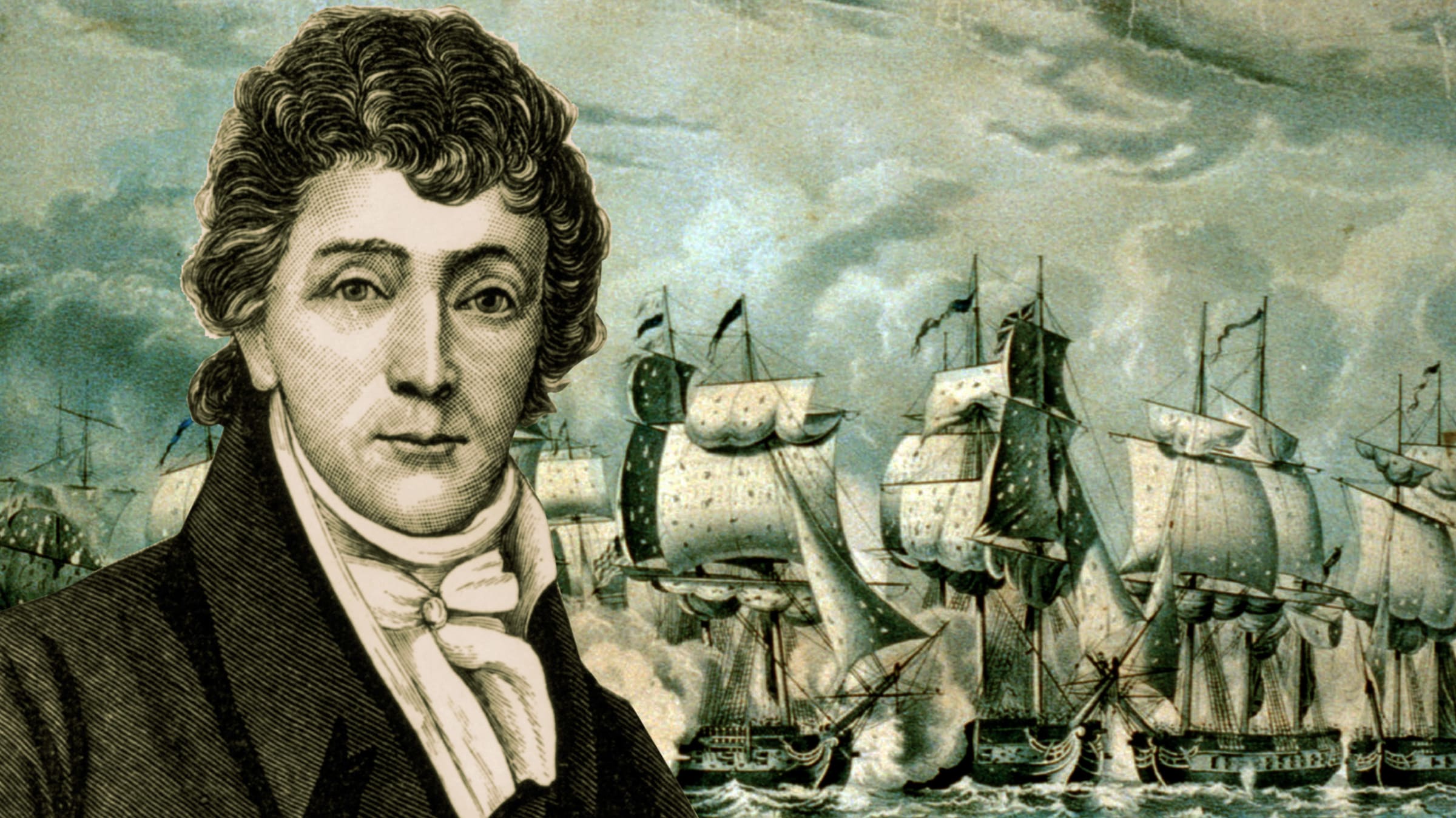
Dr. Beanes and the Star-Spangled Banner
Most people don't know that September 13-14 is a special time in American History: This is when the British bombed Baltimore for 25 hours. The city stood, and so did the nation. It was also when our country’s National Anthem was written.
Most people also don't know that one of the Medical & Chirurgical Faculty’s founding members had an essential role in it. William Beanes, M.D. is a name that should be more well-known than it is, but we are working to correct that and give him the recognition that he deserves.
Here is the story.
The Medical & Chirurgical Faculty of Maryland was founded in 1799, just years after our country was born. Many of MedChi’s early members had fought in the American Revolution, and were prepared to fight again in the War of 1812, and in the Battles of North Point and Baltimore, which took place in September of 1814.
Fort McHenry, which was defended during the Battle of Baltimore, was named after another of MedChi’s earliest members, James McHenry. However, it is one of our founding members, William Beanes, M.D. of Prince George’s County, Maryland, who played a pivotal, yet largely unknown, role in the history of our National Anthem, The Star-Spangled Banner.
If not for Dr. Beanes, Francis Scott Key would not have been on a ship in Baltimore’s Harbor, and he would never have written the poem which became our National Anthem.
William Beanes was born at Brooke Ridge, a thousand-acre farm near Croome in Prince George's County, on January 24, 1749.
There were no medical schools when Dr. Beanes studied medicine, so he most likely apprenticed with a local physician. Professionally, his reputation spread beyond the county, and in 1799, when the Medical and Chirurgical Faculty of Maryland was established, he was one of its founders and a member of its first examining board.
As the War of 1812 raged, in August of 1814, the British Army sailed up the Potomac River, planning to burn the young nation’s capital, Washington, to the ground.
Some of the army marched up the banks of the Patuxent and Potomac Rivers, and through Upper Marlborough, where Dr. Beanes lived.British General Robert Ross selected Dr. Beanes’ home as his headquarters, and Dr. Beanes agreed not to object to his presence or cause the troops harm.
Because Beanes chose not to fight against the occupation of his home, he was believed to be sympathetic to the British cause. Unbeknownst to the British, however, because it was feared that the British would burn the capital city of Annapolis, Dr. Beanes had secretly hidden Maryland state records on his property for safekeeping.However, when the British Army returned to Upper Marlborough after burning Washington, they were jubilant, drunk and marauding.
Dr. Beanes and some of his neighbors were forced to arrest some of the most badly behaved of the group. One prisoner escaped and reported to General Ross that Dr. Beanes had taken some prisoners.General Ross returned to Upper Marlborough and arrested Dr. Beanes in the middle of the night. There was great outrage at Dr. Beanes’ arrest, and for the “great rudeness and indignity heaped upon a respectable and aged old man.” Dr. Beanes travelled with the British Army down the Potomac River and up the Chesapeake Bay, as the British prepared to burn Baltimore, “a nest of pirates”, as they had done to Washington.
At the same time, a young lawyer named Francis Scott Key, a nephew of MedChi’s first President, Upton Scott, was engaged to free Dr. Beanes from the British Army.
Key travelled to Baltimore with letters of support from President James Madison, as well as letters from British prisoners whose injuries Dr. Beanes had treated only weeks earlier in Upper Marlborough.Dr. Beanes was being held on the Tonnant, a truce ship in the waters just south of Baltimore, and Key sailed out to negotiate for his release. While Key was negotiating with the British, the Battle of Baltimore was beginning.
However, before the sea battle even started, General Ross was killed by an American sharpshooter as he led his troops over land to Baltimore.
For more than 25 hours the battle raged, and bombs rained down on Fort McHenry from the British ships moored in the Patapsco River.
Dr. Beanes and Francis Scott Key watched and waited all through the night. As long as bombs were being shot back from the Fort, the men knew that all was not lost and the Fort still stood. Towards the morning, the cannon fire slowed and then stopped, followed by an ominous silence from across the water. Both men were gripped by hope and fear. Was the Fort lost to the British and would Baltimore suffer as Washington had, just weeks earlier?
As the dawn broke, Francis Scott Key and Dr. Beanes were able to see that the flag was still there, flying above Fort McHenry. They knew that the British had not been able to capture Baltimore.
As the men sailed back to Baltimore, Francis Scott Key penned the now famous poem on the back of an envelope. It was printed in a local paper and then set to the tune of an old drinking song, To Anacreon In Heaven.
Dr. Beanes returned to his home, Academy Hill in Upper Marlborough, and continued to practice medicine. He died at age 80 in October of 1828. Dr. Beanes is buried in a small graveyard in Upper Marlborough,
and is remembered throughout Prince George’s county where several roads, schools and parks bear his name, and continue to tell his story.In 1914, MedChi placed a bronze plaque at the gates to the graveyard.
In October 2013, MedChi President, Russell Wright, MD, participated in a ceremony at the gravesite where the Daughters of the War of 1812 placed a new plaque detailing Dr. Beanes’ role in the Star-Spangled Banner.Monday, September 11, 2023
Save the Dates!
This fall is shaping up to be a busy time for us here at MedChi. We're gearing up for our 225th Anniversary in 2024 and working on additional sections of the Museum. But before all of that, we have a few events that we wanted to share with you.
On October 30 and 31 from 6:30 to 7:30, we will be hosting a Ghost Tour of MedChi's Historic Headquarters Building in Mt. Vernon, which is reputed to be one of the five most haunted buildings in Baltimore.
While we can't guarantee that you will see Marcia C. Noyes, our ghost, we will tell you stories of her haunting the building, show you our extensive stacks library, our historic art collection, and the historic medical equipment our physicians have used for more than 225 years.
Tickets, which are $10/person, are limited to the first 20 reservations each night. Funds will be used to help preserve our archives. To RSVP, please email here. To purchase tickets, please scan the QR code below or click here.
Hope to see you at the Lecture or the Tour!
Friday, August 18, 2023
Ethics Lecture: Maryland as a Sanctuary State
REMINDER
MedChi's Committee on Ethics and Judicial Affairs presents the
Virtual Event - Zoom Webinar
Accreditation: “This activity has been planned and implemented in accordance with the Essential Areas and policies of the Accreditation Council for Continuing Medical Education (ACCME) through the joint providership of MedChi, The Maryland State Medical Society and The Center for a Healthy Maryland. MedChi is accredited by the ACCME to provide continuing medical education for physicians.
Designation: MedChi designates this live online educational activity for a maximum of 2 AMAPRA Category 1 CreditsTM. Physicians should claim only the credit commensurate with the extent of their participation in the activity.”
Tuesday, August 15, 2023
Huntington Williams, M.D.
Several months ago, I was lucky enough to get an intern to help me unpack and catalogue 73 boxes of books and ephemera which we had gotten from the Maryland Center for History and Culture. I had met Caroline Williams at a small lunch and invited her to come visit MedChi. In the course of our conversation and tour, I asked if she'd like to come work for us as an intern, and she accepted. She's off to graduate school now, but wrote this blog post before she left. Thanks for everything, Caroline!
Huntington Williams, M.D.
By Caroline G. Williams
When I started to work at the
Maryland State Medical Society this Spring, helping Meg Fairfax Fielding and the MedChi
team organize over 70 boxes of medical archives, I had no idea that I would
discover that some of its pre-eminent members were part of my family's story,
including my great-grandfather, Huntington Williams, M.D.
At the time of meeting Meg, I was
finishing up a project that I began in March of 2020, when COVID-19 was
declared as a National Emergency.
Instead of staying in New York
City, which was hard-hit by the pandemic, I took the Amtrak train to Baltimore and
spent the next 15 months working remotely from my parents' home.
In my spare time, I started to unpack over 30 cardboard boxes filled with family documents that had been kept in the storage area of the basement. The boxes had been unopened for decades, and the documents dated back to the 1600s. They included early daguerreotypes, old black-and-white photographs, drawings, love letters, correspondences, diaries, calendars, genealogical records, banking documents, receipts, newspaper clippings, academic notebooks, medical books, and scientific publications.
I was fascinated by the material and began to organize it into an archive. Much of the material had been assembled by Huntington Williams M.D. (1892-1992), and his wife, Mary Camilla McKim. He was the Health Commissioner of Baltimore from 1931 to 1962, and his role models and mentors in the field of public health included influences such as Sir William Osler, William H. Welch, and Henry M. Hurd. Osler, Welch, and Hurd were pioneers of modern American medicine. They were also devoted to MedChi's mission. Osler was perhaps the most famous. He came to Baltimore from Canada and was one of the Big Four founders of Johns Hopkins Medicine. He left in 1905 to become the Regius Professor of Medicine at Oxford.
William Welch, the pathologist,
had perhaps the most enduring influence on American medicine. He was
instrumental in founding the School of Hygiene and Public Health in 1918,
getting the Rockefeller Foundation to give the money for the first school of
public health in America to Johns Hopkins University instead of Harvard.
Henry Hurd is perhaps the least well-known. He was the first Director of the Johns Hopkins Hospital. He kept the trains running on time, made sure that Osler and Welch and other doctors at Hopkins published all of their medical findings, and was a surrogate father to my great-grandfather, hosting him and his family for Sunday lunch at the Hospital every week during his childhood, after Huntington’s own father, George Huntington Williams, died of typhoid fever.
A number of documents and
photographs in my family's archive had the names Osler, Hurd, and Welch on them,
but, at the time, I had no understanding of who these individuals were, and I
definitely did not know how or why they were important to modern medicine.
That changed when I began to
organize and publish the material. And it really changed when I was invited to
a lunch and met Meg Fairfax Fielding, the head of the History of Medicine in Maryland, in the Spring of 2023, and learned that MedChi
needed to unpack and organize over 70 boxes of medical archives.
The time I had spent with the
family archive was just the first round of what I was about to experience at
MedChi.
When I arrived at MedChi, Meg showed me the exhibit space that will be used when MedChi’s new museum launches in 2024. The first exhibit I saw was a wall of bookplates of MedChi members who collected books and donated some or all of their collection to the Society.
I was pleasantly surprised to see the bookplate of my great-grandfather, Huntington Williams M.D.
Huntington Williams, M.D. trained
in the field of public health because his father, George Huntington Williams,
died of typhoid fever he contracted during a field trip in Western Maryland;
and typhoid fever was a preventable disease. George Huntington Williams was the
first professor of geology at Johns Hopkins and trained the first generation of
geologists in this country. He was instrumental in getting William Welch to
come to Johns Hopkins in the early days of the University. Sir William Osler
took the train from Baltimore to Utica, New York, to try to save his life when
he fell ill. When the School of Hygiene and Public Health opened its doors in
1918, the Spanish Flu epidemic was raging, William Welch was sick with the flu,
and Huntington Williams, M.D. was on the front steps waiting to get in.
William Welch later played a role
in my great-grandfather getting his first job as a District Health officer in
New York State and helped bring him back to Baltimore as the City Health
Commissioner in 1931.
I learned all this from my
great-grandfather's memoir, which is part of the family archive, and from
helping MedChi unpack and organize its own book collection and archive, which will
be part of the Society's Museum launch in 2024.
I hope you come visit the Rare Book Room exhibit in 2024. I have had the pleasure of working on the project and hope you enjoy it as much as I’ve enjoyed putting it together.
In the words of Huntington
Williams M.D.:
“Books have always been at the very center of my personal interest; I began collecting them at a very early age. This interest developed because I have an insatiable curiosity… My father influenced me in ways that I can’t even remember, but I’m conscious of this as a solid fact…Growing up in Baltimore I often talked to family members and to a number of close family friends older than myself who had known my father well. They were mentors to me, especially Dr. Henry M. Hurd and Dr. William H. Welch. With others, they helped shape my views about life and eventually my career... Dr. Hurd was a very remarkable hospital director. In the days of Dr. Welch and Dr. Osler, when they were doing their finest research work here at Hopkins, he was the man who saw to it that these world leaders in medicine produced the texts of their addresses and papers. Otherwise, this knowledge would have been lost to prosperity. He published these texts in the Hopkins Hospital Bulletin... Dr. Hurd, Dr. Welch, and Dr. Osler were all great founders of public health in this country."
You will be able to read books published by or about all of these doctors and more!
Tuesday, August 8, 2023
Banner Article About Marcia!
Last week, we hosted a reporter, photographer, and videographer from the Baltimore Banner, a non-profit digital newspaper here in Baltimore. They were interested in meeting Marcia, and published this wonderful piece about her.
By Meredith Cohn. Photography by Kaitlin Newman
For a half century, Marcia Crocker Noyes built and oversaw a collection of 60,000 books that offered guidance of the day to the region's doctors.
The journals on the library shelves at the Maryland State Medical Society would helpfully call for a dose of heroin to calm the anxious and beer to ensure youngsters got enough vitamins. For an "epilectic fit," it was "boxing," or hitting the ears.
"That would clearly not work," said Meg Fairfax Fielding, head of the History of Maryland Medicine program for the society, caretaker of the (mostly very outdated) books.
"But Marcia was hired in 1896 and as part of the job was required to live and work on the premises so she was available at all hours when the doctors called," she said. "If they called in the middle of the night and said my patient's eyeball fell out, she'd get a book on eyeballs for them."
Legend has it that Marcia, as she's still regularly and fondly called, was so dedicated to her position as the medical librarian that she never left - even after she died in 1946.
Marcia is now the society's resident ghost and "more friendly than spooky," said Fielding, though she acknowledges occasional goosebumps. She's sure she's heard Marcia walking and pushing her wood cart of books. She's also found objects moved from where she was sure she left them the day before. Others in the Mount Vernon buildings swear they have seen Marcia.
Nondoctors and outsiders to the society known as MedChi, which now represents thousands of doctors in the state, soon may get the chance to meet the erstwhile librarian. Next year on the 225th anniversary of the society's founding as the Medical and Chirurgical Faculty of the State of Maryland, officials plan to open a medical history museum. (Chirurgical is the old-timey word for surgery.)
It's not that the city needs more macabre bona fides. (See: birth of the Ouija board, death of Edgar Allan Poe and myriand haunted Fells Point pubs.) But Fielding and others would like to give Marcia some of the spotlight, even if most people will never see her.
Marcia was pretty well known in her circles in her day, a circle that was ever growing with the rise of two medical behemoths on opposite sides of Baltimore: the University of Maryland and the Johns Hopkins University schools of medicine.
She was more or less married to the job, living in a small apartment above her dusty four-story stacks of books encompassing the upper floors of the MedChi headquarters on Cathedral Street.
She was recruited from the city's Pratt library system to the role of medical librarian at age 27 despite having no medical training by Dr. William Osler, early contributor to medical education and the library. Its initial purpose was to reduce "quackery" among medical providers, Fielding said, never mind that ear boxing thing.
Marcia grew the collection from a few thousand books to tens of thousands. She also helped establish the Medical Library Association that named an award in her honor. Doctors came to respect her. Osler was known to bring her bouquets of flowers.
Despite her relative anonymity compared to the more high-profile dead Baltimoreans, Marcia has her admirers. She and the library made it onto this year's Top 5 List of Haunted Spots compiled by Baltimore Ghost Tours.
Melissa Rowell, a tour co-founder, included the library on the list after interviewing MedChi staff years ago. The building is not actually on the the tour, as it's a bit too far north from the Fells Point ghostly epicenter and currently not open to the public.
But, Rowell said, "I never forgot the story. The most striking thing is that so many people over the years had seen or heard her."
To be fair, the building feels plenty haunted without the ghost. There are century-old portraits of gray-haired doctors with clasped hands who never take their eyes off you no matter where you move, cabinets of bone saws and assorted other "medical" devices and vials of poisons.
And yeah, there is a ghost milling about. One of those sightings was made in the early morning hours. A housekeeper was in a meeting room and saw a woman standing on the dias. She looked away for a moment and the woman was gone.
Concerned about a stranger in the building before the normal work day, she told Russ Kujan, an employee on hand.
"Who else could it be?" Kujan said with a grin.
He showed the housekeeper a picture of the librarian, dressed in her mid-century garb and shining her piercing blue eyes. The housekeeper insisted it was the same woman. Afterward, the story goes, she wouldn't agree to be in the building alone and soon resigned.
But Fielding insists Marcia is more of a jokester than a creeper. She drops things at just the right momemt to register her presence. She flickers lights to file her support or objection during a conversation. She moves picture frames in the night, just because.
Medicine may be a serious business. But thise medical librarians, always a hoot.
Originally published by the Baltimore Banner
August 8, 2023
Tuesday, August 1, 2023
The State Commission on Lunacy
In 1886, the State of Maryland established the State Lunacy Commission (SLC), consisting of the Attorney General and four others, including two physicians (who were generally members of the Faculty). Obviously, the commission's primary concern was the proper care of the state's insane, who for decades, had been "cared for" in the most dire and decrepit conditions.
Twice a year, members of the SLC visited public and private institutions, including almshouses, and reported to the commission. They also required reports from the institutions themselves. The SLC paid particular attention to the health of the patients and their living conditions, including methods used to subdue patients.
The goal of the SLC was to eliminate crowding in state mental hospitals and improve the manner of care for the patients by 1909. To help achieve this goal, several large hospitals were opened around the state, or updated from their former iterations.
The original mental hospital or asylum was at Bayview on the eastern side of Baltimore City. It was also known as the "poorhouse" something to which many residents' families objected. It had a terrible reputation and the conditions were very outdated.
The first purpose-built mental hospital was the Maryland Hospital for the Insane, founded by the legislature in 1797. Each county had an annual assessment of $100 for the care of their "lunatics" and became a lunatic and general hospital.
By 1837, it had ceased to be a general hospital and cared only for the insane. By 1857, land had been purchased to move the hospital to Spring Grove in Catonsville, to a campus of more than 135 acres.Next, in 1894, was Springfield in Sykesville, which was on a campus of more than 700 rural acres.
It adhered to the principles of Dorthea Dix, the social reformer who advocated for park-like settings, airy and open buildings, and even some vocational training. There were no bars on the doors or windows and few, if any, physical restraints on patients. The patients: men, women and epileptics, lived in colonies or groups of buildings for each group. Springfield was self-sufficient with a dairy, gardens and chicken coops.Crownsville, located on 477 acres in Anne Arundel County, was the hospital for the "negro insane."
It was established in 1910, and was specifically legislated not to be located in Baltimore City. Much of the construction work was done by the "negro inmates."As the years went by, the reputation of Crownsville became worse and worse, and the hospital was extremely overcrowded.The Mount Hope Retreat was a private, Catholic institution founded by the Sisters of Charity in 1840. In 1843, Dr. William H. Stokes became the supervisor of Mount Hope Retreat, located just north of Baltimore City and held the position for more than 40 years. Mount Hope was an atypical mental hospital – it was open and bright, and used non-restraint methods of care, and a cottage plan for residents.
There was an infamous trial against Dr. Stokes and the Sisters of Charity alleging assault and false imprisonment of several residents.
The lengthy trial came to an abrupt end when the State said that it was “…unable to sustain the indictment under the evidence offered. From beginning to end an utter shame and disgrace…” Dr. Stokes, whom the State had sought to brand as a liar and conspirator, was a gentleman whose life had been dedicated to the treatment of diseases of the mind.
In 1908 and 1909, the Maryland Medical Journal profiled each of these hospitals. If you click on the links above, you will be taken to the profiles.
Interestingly, the State Lunacy Commission employed some of the top architects of the day to design the buildings, which are each beautifully executed. The designs range from Beaux Arts to neo-colonial to Georgian revival.
Joseph Evans Sperry, who designed one of MedChi's buildings, was responsible for some of the work at Springfield. However, Henry Powell Hopkins was the Commission's architect of choice and he designed buildings at Crownsville and Springfield, as well as at the University of Maryland, which echoes some of Crownsville's Georgian revival buildings.


.jpg)
.jpg)
.jpg)
.jpg)

.jpg)